Vietnamese

Support

📱+842822446739
✉️all@lhdfirm.com

Social

How to Start a Business in Vietnam as a Foreigner: Complete Legal Guide 2026

How to Start a Business in Vietnam as a Foreigner: Legal, Regulatory and Investment Guide for Foreign Investors (2026)
Table of contents View more
Table of contents

How to Start a Business in Vietnam as a Foreigner: Complete Legal Guide

Vietnam has emerged as one of Southeast Asia's most attractive foreign direct investment (FDI) destinations, driven by sustained economic growth, geopolitical stability, an extensive network of free trade agreements (FTAs), and an increasingly sophisticated legal framework governing foreign investment activities.

Under the Law on Investment 2020 and the Law on Enterprises 2020, foreign investors are generally permitted to establish wholly foreign-owned enterprises (WFOEs), acquire equity interests in existing Vietnamese companies, or enter into joint venture arrangements with domestic partners, subject to applicable market access conditions and sector-specific regulations.

Despite the government's ongoing efforts to improve the investment environment, foreign investors continue to face complex regulatory requirements relating to investment approval procedures, enterprise registration, licensing compliance, foreign exchange control, tax administration, labor regulations, and post-licensing obligations.

Accordingly, understanding Vietnam's investment regulatory framework is essential for mitigating legal risks and ensuring a successful market entry strategy.

This guide provides a comprehensive legal analysis of the company formation process in Vietnam for foreign investors, including corporate structuring considerations, licensing requirements, foreign ownership restrictions, taxation issues, compliance obligations, and practical risk management strategies.

Why Vietnam Remains a Preferred Jurisdiction for Foreign Direct Investment

From a legal and commercial perspective, Vietnam offers a compelling investment environment when compared with other ASEAN jurisdictions.

Several structural factors continue to attract multinational corporations, private equity funds, family offices, and international entrepreneurs.

Strategic Position within Global Supply Chains

Vietnam occupies a strategically significant position within regional and international supply chains.

Its geographical proximity to China, combined with access to ASEAN markets and participation in major trade agreements such as:

  • CPTPP

  • EVFTA

  • RCEP

  • UKVFTA

provides investors with preferential access to numerous export markets.

For manufacturing enterprises, Vietnam has become a preferred "China Plus One" destination due to its competitive labor market and improving infrastructure.

Liberalization of Foreign Investment Policies

Over the past decade, Vietnam has progressively liberalized its foreign investment regime.

Foreign investors may now own up to 100% of charter capital in numerous sectors, including:

  • Information technology services

  • Software development

  • Management consulting

  • Manufacturing

  • Business process outsourcing

  • Engineering services

However, market access restrictions remain applicable to certain conditional business sectors.

Therefore, legal due diligence should always be conducted prior to selecting an investment structure.

Competitive Corporate Income Tax Environment

Vietnam maintains a standard Corporate Income Tax (CIT) rate of 20%.

Additionally, qualifying investment projects may benefit from:

  • Preferential tax rates

  • Tax holidays

  • Tax reductions

  • Import duty exemptions

  • Land rental incentives

These incentives are frequently available to projects involving:

  • High technology

  • Research and development

  • Renewable energy

  • Manufacturing

  • Industrial zones

  • Economic zones

Can Foreigners Own 100% of a Company in Vietnam?

One of the most frequently asked questions by foreign investors concerns foreign ownership limitations.

The answer depends on the specific business sector involved.

Principle of National Treatment

Vietnam generally applies the principle of national treatment to foreign investors unless restrictions are expressly imposed by law or international treaty commitments.

Accordingly, foreign investors may establish wholly foreign-owned enterprises in many sectors without requiring a Vietnamese shareholder.

Examples include:

  • Software development

  • IT outsourcing

  • Consulting services

  • Manufacturing

  • Export activities

  • Research and development

Conditional Market Access Sectors

Certain sectors remain subject to foreign ownership restrictions or additional investment conditions.

Examples may include:

  • Advertising services

  • Logistics services

  • Education services

  • Telecommunications

  • Aviation

  • Maritime transportation

  • Distribution of certain products

In such cases, investors may be required to:

  • Partner with Vietnamese shareholders;

  • Obtain additional ministerial approvals;

  • Satisfy minimum capital requirements;

  • Demonstrate professional qualifications; or

  • Meet operational conditions imposed by sector-specific legislation.

Failure to assess these restrictions before incorporation may result in licensing delays or regulatory rejection.

Foreign-Owned LLC vs Joint Venture vs Representative Office: A Legal Comparison

Selecting the appropriate market entry vehicle is one of the most significant legal decisions for foreign investors.

Wholly Foreign-Owned Limited Liability Company (WFOE)

A wholly foreign-owned limited liability company represents the most common investment vehicle for international investors entering Vietnam.

Advantages

  • Full management control

  • Independent legal personality

  • Limited liability protection

  • Strong intellectual property protection

  • Easier exit and capital transfer mechanisms

  • Greater flexibility in corporate governance

Regulatory Considerations

Most WFOEs require:

  • Investment Registration Certificate (IRC)

  • Enterprise Registration Certificate (ERC)

  • Tax registration

  • Capital contribution compliance

  • Ongoing regulatory reporting

For investors seeking long-term operational control, a WFOE is generally the preferred structure.

Joint Venture Company

A joint venture combines foreign capital with local market expertise.

Advantages

  • Access to local distribution channels

  • Regulatory advantages in restricted sectors

  • Local market knowledge

  • Shared investment risks

Legal Risks

Joint ventures often generate disputes concerning:

  • Dividend distributions

  • Board control

  • Reserved matters

  • Deadlock situations

  • Exit mechanisms

Therefore, a comprehensive Shareholders' Agreement should always be negotiated before capital contribution.

Representative Office

A Representative Office is not a separate legal entity.

It may only conduct:

  • Market research

  • Liaison activities

  • Business promotion

  • Investment facilitation

It cannot:

  • Generate revenue

  • Sign commercial contracts in its own name

  • Issue VAT invoices

A Representative Office is therefore suitable only for preliminary market exploration rather than substantive business operations.

Investment Registration Certificate (IRC): The Most Critical Stage of Foreign Investment Licensing

Unlike domestic investors, most foreign investors must first obtain an Investment Registration Certificate before establishing a legal entity.

The IRC serves as the government's approval of the proposed investment project.

The licensing authority typically evaluates:

  • Investor eligibility

  • Financial capability

  • Investment objectives

  • Market access conditions

  • Land use arrangements

  • Environmental implications

  • National security considerations

In practice, deficiencies in the investment dossier frequently constitute the primary cause of licensing delays.

Accordingly, professional legal preparation significantly improves approval prospects.

(To be continued with sections on company registration procedures, tax planning, regulatory compliance, employment law, foreign exchange controls, M&A entry strategies, nominee risks, and investor FAQs.)

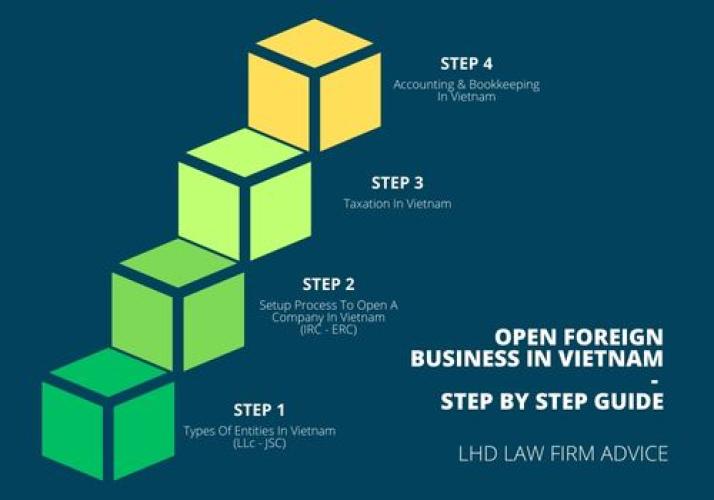
Step-by-Step Company Registration Procedure for Foreign Investors in Vietnam

Once an investor has determined the appropriate investment structure and confirmed market access eligibility, the next stage involves navigating Vietnam's investment licensing framework.

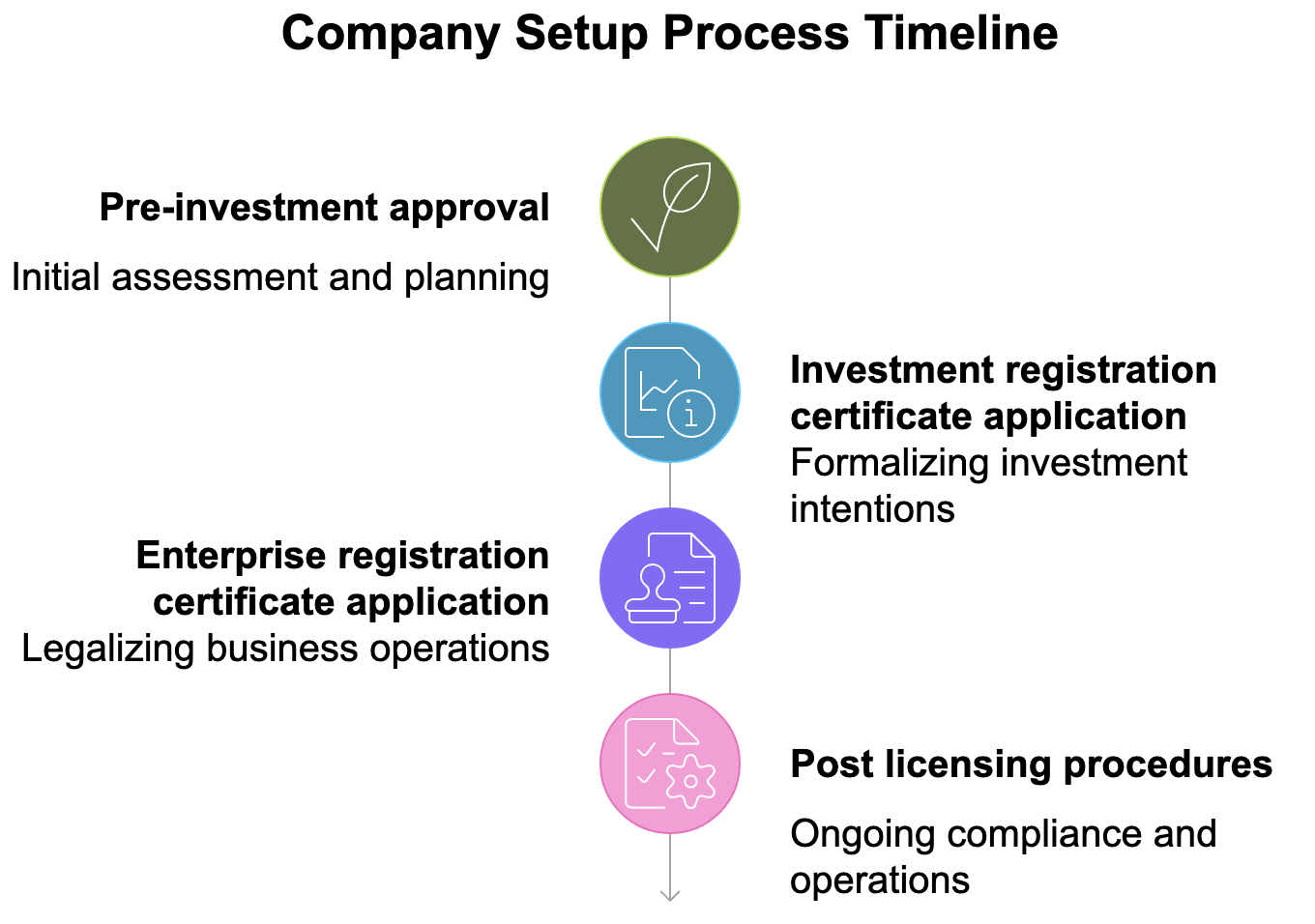
Foreign investors should understand that company formation in Vietnam generally involves a two-layer approval process:

  1. Investment Project Registration

  2. Enterprise Incorporation

Unlike many jurisdictions where company registration can be completed through a single corporate filing, Vietnam requires foreign investors to undergo a regulatory review process before obtaining corporate status.

Step 1: Preliminary Legal Due Diligence

Before submitting any application, investors should conduct comprehensive legal due diligence covering:

  • Market access restrictions

  • Conditional business sectors

  • Foreign ownership limitations

  • Licensing requirements

  • Land use restrictions

  • Environmental compliance obligations

  • Employment law implications

This stage significantly reduces licensing risks and prevents costly restructuring after incorporation.

Step 2: Securing a Registered Business Address

Vietnamese authorities require a valid registered office before issuing investment approvals.

The proposed premises must satisfy:

  • Commercial use requirements

  • Building management regulations

  • Fire prevention requirements

  • Local zoning regulations

Many foreign investors experience delays because they lease residential properties that cannot legally be used for commercial registration purposes.

Step 3: Application for Investment Registration Certificate (IRC)

The Investment Registration Certificate serves as official approval for the foreign investment project.

The licensing authority reviews:

  • Investor qualifications

  • Financial capability

  • Investment objectives

  • Charter capital

  • Project location

  • Economic impact

Typical supporting documents include:

  • Passport or corporate registration documents

  • Financial statements

  • Bank reference letters

  • Lease agreements

  • Investment project proposal

For uncomplicated projects, IRC approval generally takes between 15 and 30 working days.

Step 4: Application for Enterprise Registration Certificate (ERC)

Following IRC approval, the investor proceeds with enterprise incorporation.

The Enterprise Registration Certificate establishes the company as a legal entity under Vietnamese law.

The ERC includes:

  • Company name

  • Enterprise identification number

  • Registered office

  • Legal representative

  • Charter capital

  • Business lines

Upon issuance of the ERC, the company officially exists as a Vietnamese legal entity.

Step 5: Post-Licensing Compliance

Following incorporation, investors must complete various compliance procedures, including:

  • Tax registration

  • Electronic tax filing registration

  • Digital signature registration

  • Corporate bank account opening

  • Labor registration

  • Social insurance registration

  • Initial tax declarations

Failure to complete these procedures may expose the company to administrative penalties.

Foreign-Owned LLC vs Joint Venture: Which Structure Is Better?

Many investors ask whether they should establish a wholly foreign-owned company or cooperate with a Vietnamese partner.

The answer depends on the investor's objectives, industry, and risk tolerance.

Wholly Foreign-Owned Enterprise (WFOE)

A WFOE provides maximum control over business operations.

Advantages include:

Full Corporate Control

Foreign shareholders retain complete authority over:

  • Corporate governance

  • Profit distribution

  • Strategic planning

  • Appointment of management

Stronger Intellectual Property Protection

For technology companies and software developers, maintaining complete ownership often reduces risks relating to:

  • Trade secrets

  • Source code

  • Proprietary technology

Simpler Exit Strategy

Future sale or restructuring transactions are generally easier because there are no local shareholders whose consent may be required.

However, WFOEs may face:

  • Longer licensing timelines

  • Greater compliance obligations

  • Industry-specific restrictions

Joint Venture Company

Joint ventures remain popular in sectors where:

  • Foreign ownership caps apply

  • Local relationships are critical

  • Regulatory approvals are difficult to obtain independently

Examples include:

  • Education

  • Logistics

  • Certain distribution sectors

  • Advertising

Key Legal Risks in Joint Ventures

Disputes frequently arise concerning:

  • Board representation

  • Capital contributions

  • Dividend policies

  • Deadlock provisions

  • Exit rights

Accordingly, a professionally drafted Shareholders' Agreement is essential.

Greenfield Investment vs Acquisition of an Existing Company

Foreign investors entering Vietnam generally choose between:

Greenfield Investment

This involves establishing a completely new enterprise.

Advantages:

  • Full operational control

  • No historical liabilities

  • Flexible corporate structure

Disadvantages:

  • Longer setup period

  • Licensing process required

  • Market entry takes longer

Mergers and Acquisitions (M&A)

An acquisition involves purchasing shares in an existing Vietnamese company.

Advantages:

  • Immediate market presence

  • Existing workforce

  • Existing licenses

  • Existing customers

Disadvantages:

  • Hidden liabilities

  • Tax risks

  • Compliance deficiencies

Comprehensive legal due diligence is therefore indispensable before any acquisition.

Taxation of Foreign-Invested Enterprises

Tax planning remains one of the most important considerations when entering the Vietnamese market.

Corporate Income Tax (CIT)

The standard corporate income tax rate is:

20%

Taxable income generally includes:

  • Trading profits

  • Service income

  • Capital gains

  • Certain investment income

Value Added Tax (VAT)

Most goods and services are subject to VAT.

Common VAT rates include:

  • 0%

  • 5%

  • 10%

The applicable rate depends on the nature of the business activity.

Foreign Contractor Tax (FCT)

Foreign entities providing services into Vietnam may become subject to Foreign Contractor Tax.

This area frequently creates compliance risks for multinational groups.

Transfer Pricing Regulations

Related-party transactions must comply with Vietnam's transfer pricing regulations.

Companies should maintain:

  • Transfer pricing documentation

  • Local file

  • Master file

  • Country-by-country reporting where applicable

Failure to comply may trigger tax audits and significant penalties.

Foreign Exchange Control and Profit Repatriation

One issue frequently overlooked by investors concerns foreign exchange regulations.

Vietnam maintains specific rules governing:

  • Capital contributions

  • Foreign loans

  • Dividend remittances

  • Capital repatriation

Foreign-invested enterprises must generally open:

Direct Investment Capital Account (DICA)

This account is used for:

  • Capital injections

  • Share transfers

  • Investment proceeds

Improper use of banking channels can create significant compliance issues.

Profit Repatriation

Foreign investors may legally remit profits overseas after:

  • Completion of tax obligations

  • Submission of audited financial statements

  • Satisfaction of financial reporting requirements

Proper planning is essential to avoid delays in dividend payments.

Employment Law and Work Permit Requirements

Foreign investors frequently underestimate Vietnam's employment regulations.

Employment Contracts

Vietnamese labor law requires written employment agreements specifying:

  • Position

  • Salary

  • Benefits

  • Working hours

  • Termination rights

Social Insurance Obligations

Employers must contribute to:

  • Social insurance

  • Health insurance

  • Unemployment insurance

Work Permits for Foreign Employees

Most foreign nationals working in Vietnam require:

  • Work Permit
    or

  • Work Permit Exemption Certificate

Employers should ensure immigration compliance before hiring foreign personnel.

Common Legal Mistakes Foreign Investors Make

Selecting Incorrect Business Lines

Many investors register overly broad or inaccurate business activities.

This often results in:

  • Licensing delays

  • Regulatory amendments

  • Additional compliance costs

Underestimating Capital Requirements

Although Vietnam generally does not impose a fixed minimum capital requirement, licensing authorities assess whether proposed capital is adequate for the intended project.

Insufficient capitalization can negatively affect approval prospects.

Using Nominee Shareholder Arrangements

Some investors attempt to bypass foreign ownership restrictions through nominee structures.

This approach may create:

  • Loss of ownership rights

  • Corporate disputes

  • Regulatory enforcement actions

Professional legal advice should always be obtained before implementing such arrangements.

Ignoring Post-Licensing Compliance

Obtaining an ERC is only the beginning.

Companies must continue to satisfy:

  • Tax compliance

  • Labor compliance

  • Investment reporting obligations

  • Corporate governance requirements

Failure to do so may result in administrative sanctions.

Vietnam vs Singapore vs Thailand: Which Jurisdiction Is Better?

Vietnam

Best for:

  • Manufacturing

  • Export operations

  • Technology outsourcing

  • Industrial projects

Advantages:

  • Competitive labor costs

  • Strong FDI incentives

  • Expanding domestic market

Singapore

Best for:

  • Holding companies

  • Regional headquarters

  • Financial services

Advantages:

  • Advanced legal system

  • Low tax environment

  • Strong investor protection

Disadvantages:

  • Higher operating costs

Thailand

Best for:

  • Consumer markets

  • Tourism-related businesses

  • Automotive supply chains

Advantages:

  • Mature infrastructure

Disadvantages:

  • Certain foreign ownership restrictions remain significant.

For operational businesses requiring workforce scalability and manufacturing capabilities, Vietnam frequently presents the most cost-effective option.

Why Foreign Investors Choose LHD Law Firm

Establishing a foreign-invested enterprise requires more than filing application forms.

Investors must navigate:

  • Investment law

  • Enterprise law

  • Tax regulations

  • Labor regulations

  • Foreign exchange regulations

  • Licensing requirements

LHD Law Firm provides comprehensive legal services for foreign investors throughout the entire investment lifecycle.

Our services include:

  • Investment structuring

  • Market access analysis

  • IRC applications

  • ERC registration

  • M&A transactions

  • Legal due diligence

  • Corporate governance advisory

  • Tax compliance support

  • Employment law advisory

  • Ongoing corporate secretarial services

Our legal team combines practical commercial experience with in-depth knowledge of Vietnam's evolving regulatory framework.

Whether you are establishing a startup, manufacturing facility, technology company, regional headquarters, or acquisition vehicle, LHD Law Firm can help you navigate Vietnam's legal landscape efficiently and compliantly.

Conclusion

Vietnam continues to strengthen its position as one of Asia's leading investment destinations. However, successful market entry requires more than identifying a commercial opportunity. Investors must carefully evaluate market access conditions, licensing requirements, tax implications, corporate governance obligations, and ongoing regulatory compliance responsibilities.

Choosing the appropriate investment vehicle, conducting thorough legal due diligence, and obtaining professional legal guidance can significantly reduce risk while accelerating business operations.

For foreign investors seeking to establish, acquire, or expand a business in Vietnam, LHD Law Firm offers comprehensive legal solutions designed to support sustainable and compliant growth in one of the world's most dynamic emerging markets.

Written and reviewed by Mrs. Nguyen Phuong Khanh

FAQs

Yes. Many sectors permit full foreign ownership, although conditional sectors remain subject to restrictions.

Typically between 30 and 90 days depending on the complexity of the project and licensing requirements.


n most cases involving foreign direct investment, yes. However, certain share acquisition structures may follow different procedures.

Yes. Foreign investors may repatriate profits after satisfying tax and reporting obligations.

The Limited Liability Company (LLC) remains the most widely used structure due to its flexibility, limited liability protection, and suitability for foreign investment projects.

Comment

OUR PARTNERS

SP Group logo
Bgrimmpower
Levanta Renewables
Supercorp
TAF Toyota
Maersk
Yamazen
Beiersdorf.vn
Saigon Co.op
Thyssenkrupp
PKDVN
Ricoh
Fivimart
Wacoal Viet Nam
Sumitomodrive