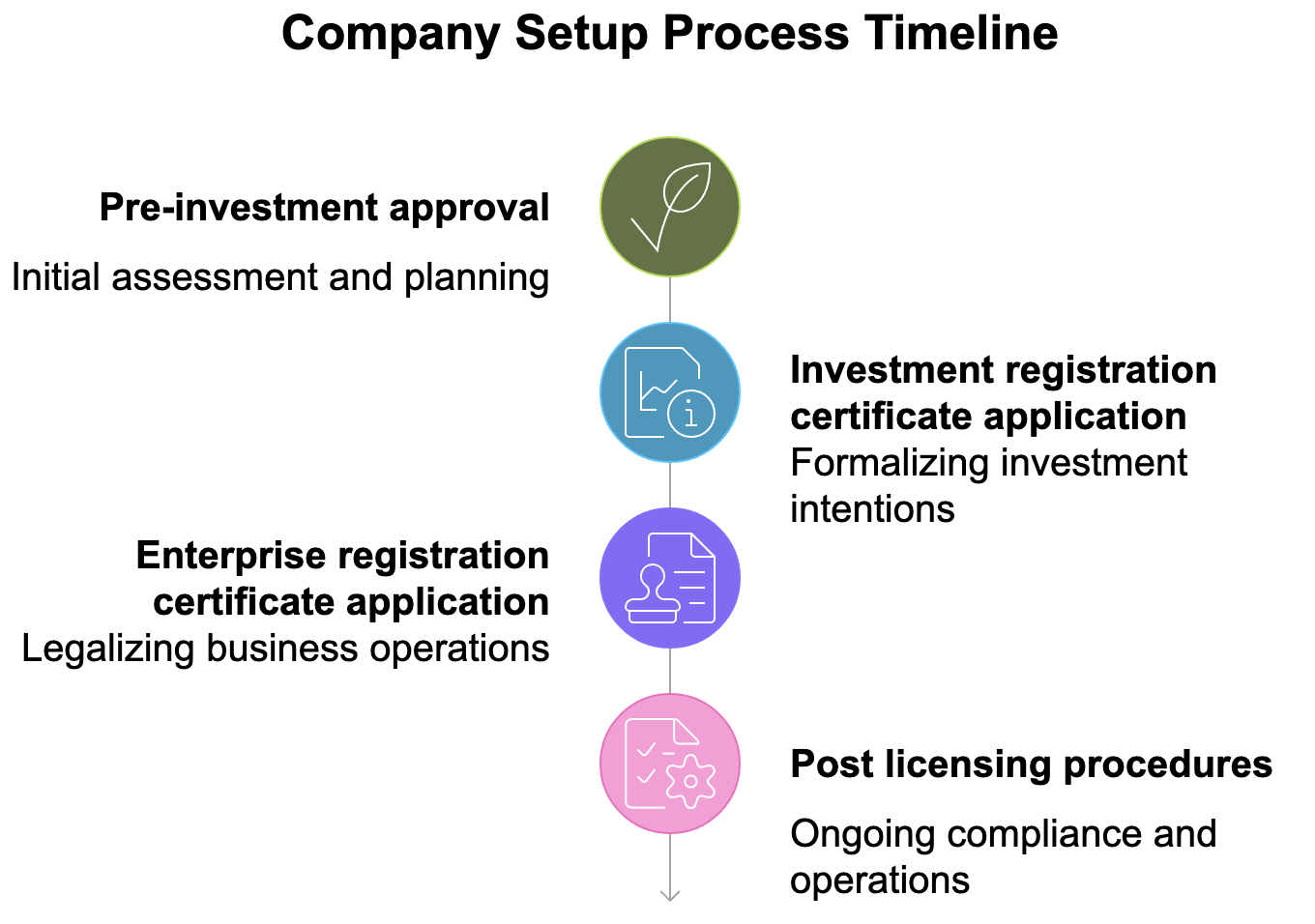
Vietnam is one of the fastest-growing economies in the world. The low cost of living and highly qualified population make it an ideal location for foreign companies who are looking to branch out and invest. However, expanding internationally has its disadvantages as well. Not knowing the local laws and regulations makes it a thousand times harder to open a company overseas.
Vietnam's real estate market is undergoing a period of significant transformation, underpinned by a new legal architecture set to take full effect on January 1, 2025. The implementation of the 2023 Housing Law and the 2024 Land Law represents a concerted effort by the government to enhance market transparency, formalize regulations, and manage foreign investment in this critical sector.1 While these reforms provide a clearer framework for foreign participation, they also codify and reinforce a set of fundamental restrictions and complexities that every potential investor must comprehend before committing capital.
At the heart of Vietnam's property law is a foundational principle that distinguishes it from many Western and regional markets: the absolute prohibition of foreign land ownership.4 All land is considered to be collectively owned by the Vietnamese people and is administered exclusively by the state.5 Consequently, a foreigner purchasing an apartment in Vietnam is not acquiring a freehold title. Instead, they are purchasing the physical structure of the unit—the "bricks and mortar"—while simultaneously entering into a time-limited leasehold agreement for the right to use the land upon which the building stands.6 This legal distinction between owning a building and leasing the land is the single most important concept for a foreign buyer to grasp, as it has profound and far-reaching implications for ownership rights, long-term value, and investment security.
This structure introduces a significant, often overlooked, financial risk. The purchase price of an apartment invariably includes a substantial premium for its location, which is a proxy for the value of the underlying land use rights.However, the legal framework explicitly denies foreigners the status of "land users" under the Land Law, meaning their ownership certificate, the "Pink Book," does not confer any legal rights to the land itself.This creates a critical legal and financial vulnerability. In the event that the state exercises its sovereign right to expropriate the land for public purposes, the existing legal framework provides no clear mechanism to compensate the foreign property owner for the land value component they implicitly paid for at the time of purchase. This disconnect between the financial reality of the transaction and the legal limitations of ownership represents a fundamental, unmitigated risk that is embedded in the very structure of foreign property investment in Vietnam.
Before exploring specific properties or engaging with developers, a potential foreign buyer must first conduct a rigorous self-assessment of their legal eligibility, financial capacity, and professional support network. This foundational step is non-negotiable and serves to filter out unqualified buyers and establish the necessary framework for a secure transaction.
The 2023 Housing Law establishes clear, mandatory conditions that a foreign individual must meet to be eligible to purchase and own an apartment in Vietnam. These are not discretionary and form the first gate of the investment process.
Condition 1: Permitted Entry: The primary requirement is that the foreign individual must be "permitted to enter Vietnam." In practical terms, this is verified by possessing a valid passport that has been stamped with an entry visa by Vietnamese immigration authorities at a port of entry.4 It is important to note that a long-term residency permit is not a prerequisite for purchasing property; a valid entry stamp suffices.
Condition 2: No Diplomatic Immunity: The individual must not be entitled to diplomatic or consular privileges or immunity as defined by Vietnamese law.4 This provision is designed to ensure that all foreign property owners are subject to the full jurisdiction of Vietnamese law.
Beyond the standard eligibility for foreign nationals, Vietnamese law provides preferential treatment for specific categories of individuals, which can significantly alter the terms of ownership.
Spouses of Vietnamese Citizens: A foreigner who is legally married to a Vietnamese citizen residing in Vietnam is granted a significant advantage. They are eligible to acquire property with the same "stable and long-term" ownership rights as a domestic citizen, effectively bypassing the standard 50-year leasehold limitation imposed on other foreigners.4 This is the most secure form of ownership available to a non-Vietnamese national.
Overseas Vietnamese (Viet Kieu): The 2024 Land Law and associated regulations substantially expand the property rights of Viet Kieu. Individuals who can provide official documentation of their Vietnamese origin are granted rights nearly equal to those of domestic citizens, including more favorable ownership terms and fewer restrictions compared to other foreign investors.
The financial aspects of purchasing property in Vietnam are rigid and require substantial upfront capital.
Comprehensive Budgeting: The list price of an apartment is only the starting point. A realistic budget must account for a host of mandatory transactional costs. These include a 10% Value Added Tax (VAT) on the purchase of new properties from a developer, a 0.5% registration fee to secure the ownership title, and a 2% maintenance or "sinking" fund contribution paid at handover for the long-term upkeep of the building's common areas.
Strict Fund Transfer Protocols: All property transactions must be conducted in the local currency, the Vietnamese Dong (VND). Foreign buyers are required to open an account at a Vietnamese bank. Funds for the purchase must be wired directly from an authorized overseas bank account into this local account. This process is strictly monitored to comply with Vietnam's anti-money laundering regulations, and the bank will require documentation confirming the purpose of the transfer.
No Local Financing: A critical constraint is that Vietnamese banks are prohibited from offering mortgages or any form of financing to foreign individuals for property purchases.7 This means the entire transaction must be funded with cash or through financing secured from lenders in the buyer's home country. This lack of local leverage makes property acquisition in Vietnam a highly capital-intensive endeavor.
Given the intricate legal framework, the potential for bureaucratic impediments, significant language barriers, and the unique risks inherent in the market, engaging an experienced, independent, and bilingual Vietnamese lawyer is not an option—it is an absolute necessity. A reputable lawyer specializing in real estate law will be the buyer's most critical advisor, responsible for conducting independent due diligence, meticulously reviewing all contracts, verifying the developer's legal standing, and safeguarding the buyer's interests at every stage of the transaction.7 Proceeding without dedicated legal counsel is an unacceptable risk.
| Provision | Regulation | Key Limitations/Details | Relevant Law(s) |
| Land Ownership | Prohibited | Foreigners cannot own land. All land is collectively owned by the people and managed by the state. | 2024 Land Law |
| Structure Ownership | Permitted | Foreigners can own apartments and landed houses within approved commercial housing projects. | 2023 Housing Law |
| Ownership Term | 50-Year Leasehold | The term begins from the date the ownership certificate ("Pink Book") is issued. A one-time extension of an additional 50 years may be granted upon application. | 2023 Housing Law |
| Condominium Quota | 30% of Units | Foreigners can collectively own no more than 30% of the total units in a single condominium building. For multi-block buildings, the cap applies to each individual block. | 2023 Housing Law; Decree 95/ND-CP |
| Landed Property Quota | 250 Houses per Ward | Foreign ownership is capped at 10% of properties in a single project, and no more than 250 houses in total within an administrative area equivalent to a ward. | 2023 Housing Law; Decree 95/ND-CP |
| Prohibited Zones | Restricted | Foreigners are prohibited from owning property in areas designated as critical for national defense and security. | 2023 Housing Law; Decree 95/2024/ND-CP |
Once eligibility is confirmed and a financial plan is in place, the next step involves navigating the market to identify suitable and legally compliant investment opportunities. This requires an understanding of key geographical hubs, eligible property types, and the critical importance of vetting developers and verifying ownership quotas.
While property is available for sale across Vietnam, foreign investment tends to concentrate in a few key urban and coastal centers known for their economic dynamism, infrastructure development, and large expatriate communities.
Ho Chi Minh City (HCMC): As Vietnam's undisputed economic engine, HCMC offers the most dynamic and liquid real estate market. It boasts strong rental demand driven by a large multinational corporate presence and a burgeoning professional class. Districts such as District 1 (the central business district), District 2 (particularly the Thao Dien ward, popular with expatriates), and District 7 (Phu My Hung) are prime locations for high-end apartments with significant potential for capital appreciation.
Hanoi: The nation's political and cultural capital presents a more stable, mature market. Its growing expatriate population, driven by diplomatic missions and international organizations, creates consistent demand for quality housing. Areas like Tay Ho (West Lake) are highly sought after for their lakeside views, international schools, and high-end residential developments.
Da Nang & Nha Trang: These central coastal cities are hotspots for tourism-driven real estate investment. They are popular choices for vacation homes and properties intended for the short-term rental market. Their appeal is enhanced by clean environments, modern infrastructure, and international airport access, making them attractive for lifestyle and rental-yield-focused investors.
Vietnamese law is highly specific about the types of properties foreigners are permitted to purchase. Investment is restricted to units within large, formally approved projects.
Commercial Housing Development Projects: Foreigners can only purchase apartments (condominiums) or landed properties (such as villas or townhouses) that are part of a designated "commercial housing development project".4 This means a buyer cannot purchase a standalone, privately built house from a local individual. The property must be part of a master-planned development that has received government approval for construction and sale. The purchase of agricultural land is strictly prohibited.
The choice of developer is one of the most critical decisions in the purchasing process. A developer's reputation, financial stability, and track record are paramount. A reputable developer is more likely to deliver a quality product on time and, crucially, has the experience and legal compliance to navigate the complex bureaucracy required to secure the final ownership certificates ("Pink Books") for its buyers.14 Investors should conduct thorough research into a developer's history, examining previously completed projects and speaking with existing homeowners. Red flags include a history of significant construction delays, public disputes with buyers, or a pattern of failing to deliver Pink Books in a timely manner.
A unique and critical feature of the Vietnamese market is the strict cap on foreign ownership within any given project.
The 30% and 250-Unit Caps: The law stipulates that foreigners, in aggregate, may own no more than 30% of the total units in any single condominium building.6 For projects containing landed properties like villas or townhouses, the foreign ownership cap is 10% of the properties within that project, and an overarching limit of no more than 250 such houses within a single administrative ward.10 In condominium complexes with multiple towers built on a shared podium, this 30% limit is applied to each individual tower, not the project as a whole.17
Before paying any deposit, it is imperative for the buyer or their lawyer to formally verify the current foreign ownership status of the project with the developer and, if possible, the local Department of Construction. This confirmation of quota availability should be obtained in writing.
This ownership quota is not merely a barrier to entry; it functions as a fundamental structural impediment to market liquidity and poses a significant risk to an investor's future exit strategy. The logic is straightforward: once a building's 30% foreign quota is filled, the legal framework prohibits any further sales to foreign nationals within that building. This means that a foreign owner wishing to sell their unit is legally barred from transacting with another foreigner. Their pool of potential buyers immediately and permanently shrinks to exclusively Vietnamese citizens or eligible Viet Kieu.7 This restriction creates an artificial and illiquid sub-market for foreign-owned properties. When the supply of potential buyers is legally constrained, sellers lose negotiating power, which can lead to downward pressure on resale prices and significantly prolong the time required to liquidate the asset. This quota-induced illiquidity is a permanent feature of the investment and must be factored into any realistic calculation of potential capital gains and overall risk.
Due diligence is the most critical risk-mitigation phase of the entire acquisition process. The Vietnamese real estate market is characterized by bureaucratic complexity, inconsistent regulatory interpretation at the local level, and the potential for developer non-compliance or misrepresentation.18 Therefore, a thorough and multi-layered due diligence investigation, conducted by the buyer's independent legal counsel, is indispensable for a secure investment.9 This process must go far beyond a simple review of the sales contract and should involve a deep verification of the project's legal foundation and the specific unit's status.
A systematic due diligence process serves several key functions: it mitigates the risk of financial loss from fraudulent or legally non-compliant projects, ensures the property is eligible for foreign ownership, protects the buyer from future disputes over title or land use, and provides a clear legal basis for the investment.20 Skipping or rushing this step can lead to catastrophic outcomes, including the purchase of an un-sellable asset or the complete loss of invested capital.
A robust due diligence checklist should be structured in layers, starting with the broadest project-level approvals and narrowing down to the specific details of the individual apartment.
This foundational layer confirms that the developer has the legal right to build and sell the project.
Master Pink Book: The lawyer must verify that the developer holds the master "Pink Book" (Certificate of Land Use Rights) for the entire project land. This is the ultimate proof that the developer has legal control over the land and the right to develop it.
Official Approvals: A complete dossier of project approvals must be inspected. This includes the Investment Registration Certificate (IRC), the official land allocation or land lease decision from the government, the master planning approval (also known as the 1/500 plan), the construction permit for the building, and the fire safety acceptance certificate issued upon completion.17
Approval for Foreign Sale: The lawyer must confirm that the project is included on the official list of developments that the provincial People's Committee has approved for sale to foreign individuals and organizations. Not all projects are open to foreign buyers, and this list is the definitive source.
This layer ensures the specific purchase complies with foreign ownership limitations.
Written Quota Confirmation: As mentioned in Step 2, obtaining a formal, written statement from the developer confirming that the 30% foreign ownership quota has not been exceeded is essential.17
Prohibited Zone Check: The lawyer must cross-reference the project's location against the lists of areas deemed critical for national defense and security, which are published by the Ministry of Public Security and the Ministry of National Defense. Foreign ownership in these zones is strictly forbidden.
This final layer focuses on the individual apartment unit being purchased.
Title Search: A title search must be conducted at the local land registration office to confirm that the specific apartment is free from any existing legal encumbrances, such as mortgages, liens placed by creditors, or court-ordered seizure notices.
Physical Inspection: While the lawyer handles the legal verification, the buyer should engage a professional building inspector or engineer. This expert will assess the physical condition of the property, including its structural integrity, the quality of the finishing, and the functionality of the plumbing, electrical, and HVAC systems, to identify any defects not apparent to an untrained eye.
| Category | Checklist Item | Document to Verify / Action to Take | Status |
| Developer & Project Legal Status | Developer's Right to Land | Master Pink Book for the entire project land. | |
| Investment Approval | Investment Registration Certificate (IRC) or Decision on Investment Policy. | ||
| Construction Approval | Valid Construction Permit for the specific building/block. | ||
| Fire Safety Approval | Certificate of Fire Safety Acceptance upon completion. | ||
| Approval for Foreign Sale | Confirmation that the project is on the official list published by the local Department of Construction. | ||
| Quota & Zoning Verification | Foreign Ownership Quota | Obtain a written confirmation letter from the developer stating quota availability. | |
| National Security Zones | Verify the project location is not within a prohibited zone as defined by the Ministries of Defense and Public Security. | ||
| Specific Unit Verification | Clear Title | Conduct a title search at the Land Registration Office to check for mortgages, liens, or disputes. | |
| Contractual Consistency | Ensure the apartment details (area, layout) in the Sales Agreement match the approved construction plans. | ||
| Physical Condition | Engage a professional inspector to conduct a thorough physical inspection of the unit for defects. | ||
| Outstanding Payments | Verify with the developer/management that there are no outstanding fees or taxes on the unit. |
Following successful due diligence, the buyer proceeds to the contractual phase. This involves a two-stage process: a preliminary reservation to secure the unit, followed by the execution of the main, legally binding Sales and Purchase Agreement (SPA). This stage requires meticulous legal review to ensure the buyer's rights and financial interests are protected.
The first step to formalizing the purchase is typically the signing of a Reservation Agreement (or a similar deposit contract).
Purpose and Function: This agreement allows the buyer to take a specific apartment unit off the market for a defined period while the main SPA is being prepared and reviewed. To execute this, the buyer pays a refundable booking deposit, which usually amounts to 5% to 10% of the property's total price.
Legal Review: Even though this is a preliminary step, the Reservation Agreement is a legal contract. It should be reviewed by the buyer's lawyer to ensure the terms are fair, particularly the conditions under which the deposit is refundable (e.g., if due diligence reveals a critical issue or if the developer fails to produce the SPA within the agreed timeframe).
The SPA is the cornerstone of the transaction. It is a comprehensive, legally binding contract that details every aspect of the purchase. It must be provided in a bilingual Vietnamese-English format, and the buyer's lawyer must conduct an exhaustive review of its terms before it is signed. Key clauses that demand intense scrutiny include:
Payment Schedule: For off-plan properties, the payment schedule must be clearly defined and linked to verifiable construction milestones (e.g., completion of the foundation, topping-out of the structure, handover of the unit).7 The amended Real Estate Business Law of 2023 also introduces stricter consumer protections, capping the initial deposit a developer can collect for a future property at 5% of its value until all legal conditions for the sale are met.
Handover Conditions: The SPA must contain a detailed appendix specifying the exact condition of the apartment at handover, including the brands and models of all fixtures, fittings, and appliances.
Defect Liability Period: This clause outlines the developer's legal obligation to rectify any construction defects identified by the buyer within a specified period (typically 12-24 months) after the handover date.
Penalty Clauses: The agreement must contain reciprocal penalty clauses that apply to both parties for any breach of contract. This includes penalties for the buyer's late payments as well as penalties for the developer's failure to meet the agreed handover date.
Pink Book Application Obligation: A critical clause must explicitly state the developer's responsibility and a clear timeline for preparing and submitting the application dossier for the buyer's Pink Book to the relevant government authorities after handover.
The legal requirement for notarizing an SPA depends on the nature of the sale.
Secondary Market (Resale): When purchasing an apartment from a previous owner (a resale transaction), the SPA must be notarized at a public notary office to be considered legally valid and to be accepted by the authorities for the title transfer.
Primary Market (from Developer): For primary sales of new properties directly from a licensed real estate developer, the law may not strictly require the SPA to be notarized.However, it is highly advisable for the buyer to insist on notarization. A notarized contract provides an additional layer of legal certainty and official verification of the transaction, which can be invaluable in the event of a future dispute.
When considering the secondary market, a significant legal ambiguity arises from the new 2023 Housing Law. While market practice and general guidance suggest that foreigners can sell their properties to other foreigners 7, a strict textual analysis of the new law presents a potential contradiction. The law specifies that eligible foreign individuals may purchase commercial housing from "the investor of a housing construction investment project".10 An individual foreigner who previously bought a unit and is now reselling it is not the "investor" of the project. This discrepancy creates a potential legal challenge to the validity of foreign-to-foreign resale transactions. If this provision is interpreted strictly by the courts or guiding decrees, it could render such transactions legally voidable, posing a substantial risk to both the buyer and seller in the secondary market. This is a critical point of uncertainty that must be carefully assessed by legal counsel based on the most current implementing regulations and legal precedents.
The financial component of an apartment purchase in Vietnam is governed by strict regulations concerning currency, fund transfers, and a schedule of taxes and fees. Meticulous financial planning is essential to ensure a smooth transaction and to avoid unforeseen costs that can significantly impact the total investment outlay.
The process for transferring funds and making payments is highly regulated to ensure transparency and compliance with financial laws.
Open a Local Bank Account: The foreign buyer must first open a bank account in their own name at a licensed bank in Vietnam.
Wire Transfer Funds: The funds for the purchase must be transferred via international wire from the buyer's overseas bank account directly to their newly opened Vietnamese bank account. The purpose of the remittance must be clearly and correctly stated as "for property purchase in Vietnam."
Bank Confirmation: The Vietnamese bank will issue an official confirmation document for the inbound transfer. This document is legally significant as it serves as proof of the legitimate, foreign source of the funds and is often required as part of the dossier for the Pink Book application.
Payment in Local Currency: All payments to the developer or seller must be made in Vietnamese Dong (VND) from the buyer's local Vietnamese bank account.7
The timing and structure of payments depend on whether the property is under construction (off-plan) or already completed.
Off-Plan Properties: For properties purchased before or during construction, payments are made in installments that are contractually tied to the achievement of specific construction milestones. A typical schedule might involve payments upon signing the SPA, completion of the building's foundation, the "topping-out" ceremony (when the final structural beam is placed), and the final large payment at the time of handover.7
Completed Properties: For properties that are already built, the payment schedule is much more condensed. The buyer is typically required to pay up to 95% of the total purchase price upon signing the SPA, with the final 5% due upon handover and receipt of the Pink Book.
A prudent investor must budget for a range of costs beyond the agreed-upon purchase price. These costs are incurred at different stages of the transaction: at the time of purchase, upon handover, during ownership, and at the point of resale.
| Cost Item | Amount / Rate | Payer | Due Date / Stage | Notes |
| At Purchase | Booking Deposit | 5-10% of Price | Buyer | Upon signing Reservation Agreement |
| SPA Installment Payments | Per SPA Schedule | Buyer | Tied to construction milestones or SPA signing | |
| At Handover / Registration | Value Added Tax (VAT) | 10% of new property price | Buyer | At or before handover |
| Registration Fee | 0.5% of property value | Buyer | During Pink Book application | |
| Maintenance / Sinking Fund | 2% of pre-VAT price | Buyer | At handover | |
| Administrative Fees | Minor fees | Buyer | During Pink Book application | |
| At Resale | Personal Income Tax | 2% of total transaction price | Seller | At time of sale |
| If Rented Out | Value Added Tax (VAT) | 5% on rental revenue | Owner | Periodically |
| Personal Income Tax (PIT) | 5% on rental revenue | Owner | Periodically |
The culmination of the purchasing process involves two final, crucial stages: the physical handover of the apartment and the legal process of securing the ultimate proof of ownership, the "Pink Book." This period is often marked by administrative hurdles and represents a phase of significant vulnerability for the buyer.
The handover is the point at which the developer physically transfers possession of the completed apartment to the buyer. This is a formal process that involves a final, detailed inspection of the unit. The buyer, ideally accompanied by their lawyer or a technical expert, should meticulously check the property against the specifications, floor plans, and list of fixtures detailed in the SPA. Any defects, discrepancies, or missing items should be formally documented in a handover report, which the developer is then contractually obligated to rectify within the defect liability period.
While the SPA is a critical contract, it is not the final word on ownership. The ultimate goal for any property buyer in Vietnam is to obtain the Pink Book.
Legal Significance: The Pink Book is the official, state-issued title document that serves as incontrovertible legal proof of a person's ownership rights over the property.6 It legally supersedes the SPA, which is a private agreement between the buyer and the developer.Holding the Pink Book grants the owner the full legal authority to sell, lease, mortgage (where permissible), and bequeath the property, subject to the limitations of Vietnamese law.
Key Limitation for Foreigners: For a foreign owner, the Pink Book contains a critical stipulation: it explicitly records the duration of the ownership term. This term is set at 50 years, commencing from the date the certificate is officially issued by the government, not from the date of purchase or handoverThe law allows for a one-time application to renew this leasehold for an additional 50-year term.
The responsibility for managing the Pink Book application process typically falls to the developer.
Developer's Role: Following the handover, the developer is obligated to compile a complete application dossier—including the notarized SPA, the buyer's personal documents, and proof of payment—and submit it to the local Department of Natural Resources and Environment on the buyer's behalf.
Bureaucratic Delays: The process of issuing Pink Books in Vietnam is notoriously prone to bureaucratic delays. It is not uncommon for buyers to wait months, or in some cases, several years, after handover to receive their final title certificate.These administrative delays are not benign; they directly erode the buyer's 50-year ownership term, as the clock only starts ticking upon the certificate's issuance.
This interval between making the final payment at handover and receiving the state-recognized Pink Book creates a period of maximum risk for the foreign buyer, which can be termed the "SPA Limbo." During this phase, the buyer has fulfilled nearly all of their financial obligations, often having paid 95-100% of the purchase price, yet their ownership is recognized only through a private contract with the developer. They do not yet possess a state-guaranteed title. This exposes the buyer to the developer's solvency and compliance risks. Should the developer face bankruptcy, become embroiled in legal disputes, or be found to have unresolved legal flaws in the project's permits during this limbo period, the issuance of the Pink Book could be indefinitely delayed or even become impossible. In such a scenario, the buyer is left in a precarious legal position, holding a highly illiquid asset that is difficult to sell without a clean title and facing the prospect of a protracted and costly legal battle to enforce their contractual rights. This reframes the post-handover waiting period not as a simple administrative formality, but as a distinct phase of heightened financial and legal vulnerability.
Acquiring the property is not the end of the journey. A prudent investor must have a clear strategy for managing the asset, understanding the regulations around leasing, and planning for an eventual exit, whether through sale or inheritance.
As the legal owner of an apartment, an individual is responsible for paying monthly management fees to the building's management board. These fees cover the cost of security, cleaning of common areas, landscaping, and general upkeep of the building's facilities. The owner is also responsible for their own utility bills.
Many foreign owners purchase apartments as investments with the intention of generating rental income. This activity is permitted but is subject to specific tax and regulatory requirements.
Tax Obligations: All rental income generated from the property is subject to taxation. The owner must pay a 5% VAT on the gross rental revenue and a 5% Personal Income Tax (PIT) on the same revenue, for a total tax liability of 10% on all rental income.
Short-Term Rentals: Operating a property as a short-term rental (e.g., through platforms like Airbnb) is subject to much stricter regulations, particularly in major cities like Ho Chi Minh City. To do so legally, the owner may be required to register as a business, obtain formal approval from the apartment building's general meeting of owners, and comply with stringent security regulations, which include registering the temporary residence of every guest with the local police within 24 hours of check-in.
Foreigners have the right to bequeath their Vietnamese property in their will. However, the rights of the foreign heir are conditional and can lead to complex situations.
Conditional Inheritance: A foreign heir can only take direct ownership of the inherited property if they meet all the standard eligibility requirements for a foreign buyer in Vietnam (e.g., have a valid entry visa) and if the foreign ownership quota in the building is not already full.
Entitlement to Monetary Value: If the foreign heir is not eligible to own the property—due to visa issues, quota limitations, or other reasons—they are not entitled to the property itself. Instead, Vietnamese law stipulates that they are entitled only to the monetary value of the property.27 This legal provision effectively triggers a mandatory sale of the asset.
Inheritance Tax: Inheritances with a value exceeding VND 10 million are subject to a 10% PIT. However, a crucial exemption exists for transfers between immediate family members, including spouses, parents and children (including adopted), parents-in-law and children-in-law, grandparents and grandchildren, and siblings.
The legal framework governing inheritance for ineligible foreign heirs creates what is effectively a forced liquidation event. The process is not a simple transfer of an asset from one generation to the next. Instead, it compels the estate to sell the property on the open market to realize its cash value for the heir. This forced sale is subject to the prevailing market conditions at the time of death, which may be unfavorable. Furthermore, the transaction itself is complex, requiring the heir or their representative to navigate the Vietnamese legal system, pay the standard 2% transaction tax on the sale price, and contend with the potential market illiquidity issues previously discussed. This means the net value ultimately received by the heir can be significantly diminished by market timing, transaction costs, and the potential for price erosion inherent in a forced sale scenario.
A clear exit strategy is a hallmark of any sound investment. In Vietnam, this involves understanding the resale process and its associated costs and challenges.
The Resale Process: A foreign owner has two primary avenues for selling their apartment. They can sell it to another eligible foreigner, provided the 30% foreign ownership quota in the building has not been met. Alternatively, they can sell it to a Vietnamese citizen. The latter option is often faster and involves fewer legal restrictions, making it the more common exit route.
Capital Gains Tax: The tax levied on the resale of a property is a critical factor in calculating the net return on investment. Vietnam imposes a 2% Personal Income Tax on the transaction. Crucially, this tax is calculated on the total gross sale price as stated in the contract, not on the profit or capital gain made from the sale.This punitive tax structure can significantly reduce returns, especially for properties that have not appreciated substantially.
Market Liquidity: As previously noted, the resale market for foreign-owned properties can be challenging. The strict quota system limits the pool of potential foreign buyers, and a general preference within the local market for brand-new developments can make second-hand properties less attractive, potentially leading to longer selling periods and reduced pricing power for the seller.18
The Vietnamese real estate market in the post-2025 era presents a landscape of compelling opportunity balanced by significant and deeply embedded structural risks. The new legal framework offers greater clarity but simultaneously reinforces the fundamental limitations on foreign ownership. For the prudent investor, a successful strategy is not one that ignores these risks, but one that understands, quantifies, and actively mitigates them.
The analysis reveals a series of critical risks that must be at the forefront of any investment decision. These include the uncompensated land value risk in the event of state expropriation; the quota-induced liquidity barrier that constrains exit strategies; the legal ambiguity surrounding the foreign-to-foreign secondary market under the new Housing Law; the period of heightened vulnerability during the "SPA Limbo" between payment and title issuance; and the transformation of inheritance into a forced liquidation event for many foreign heirs. These are not minor hurdles but foundational characteristics of the market.
In light of these challenges, a viable investment strategy must be built upon three core pillars:
Exhaustive, Independent Legal Due Diligence: This is the single most important risk mitigation tool. Engaging expert legal counsel to verify every aspect of the project's legal standing, from the developer's master title to the unit's freedom from encumbrances, is non-negotiable.
Conservative Financial Modeling: A realistic financial plan must account for all transactional costs, including the 10% VAT, 2% sinking fund, and 0.5% registration fee. Crucially, exit calculations must factor in the 2% tax on the total resale price, not on profit, which has a substantial impact on net returns.
A Long-Term Investment Horizon: The market's potential for bureaucratic delays, the time required to secure the Pink Book, and the challenges of market liquidity make it unsuitable for short-term, speculative investment. Success requires patience and the financial capacity to weather potential illiquidity.
Ultimately, Vietnam's property market offers strong potential for capital appreciation and rental yields, driven by robust economic growth and rapid urbanization. However, it is a market structured with inherent legal and financial complexities that favor the well-informed, patient, and highly capitalized investor. It is not a market for the risk-averse, the under-capitalized, or those seeking a quick, leveraged return. Success is contingent on navigating the system with expert guidance and a clear-eyed understanding of the fundamental limitations that define foreign property ownership in Vietnam.
© 2025 LHD Law Firm

Comment