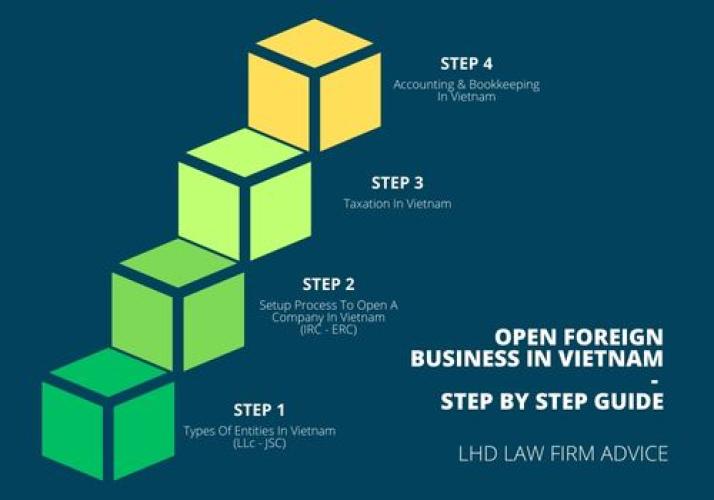
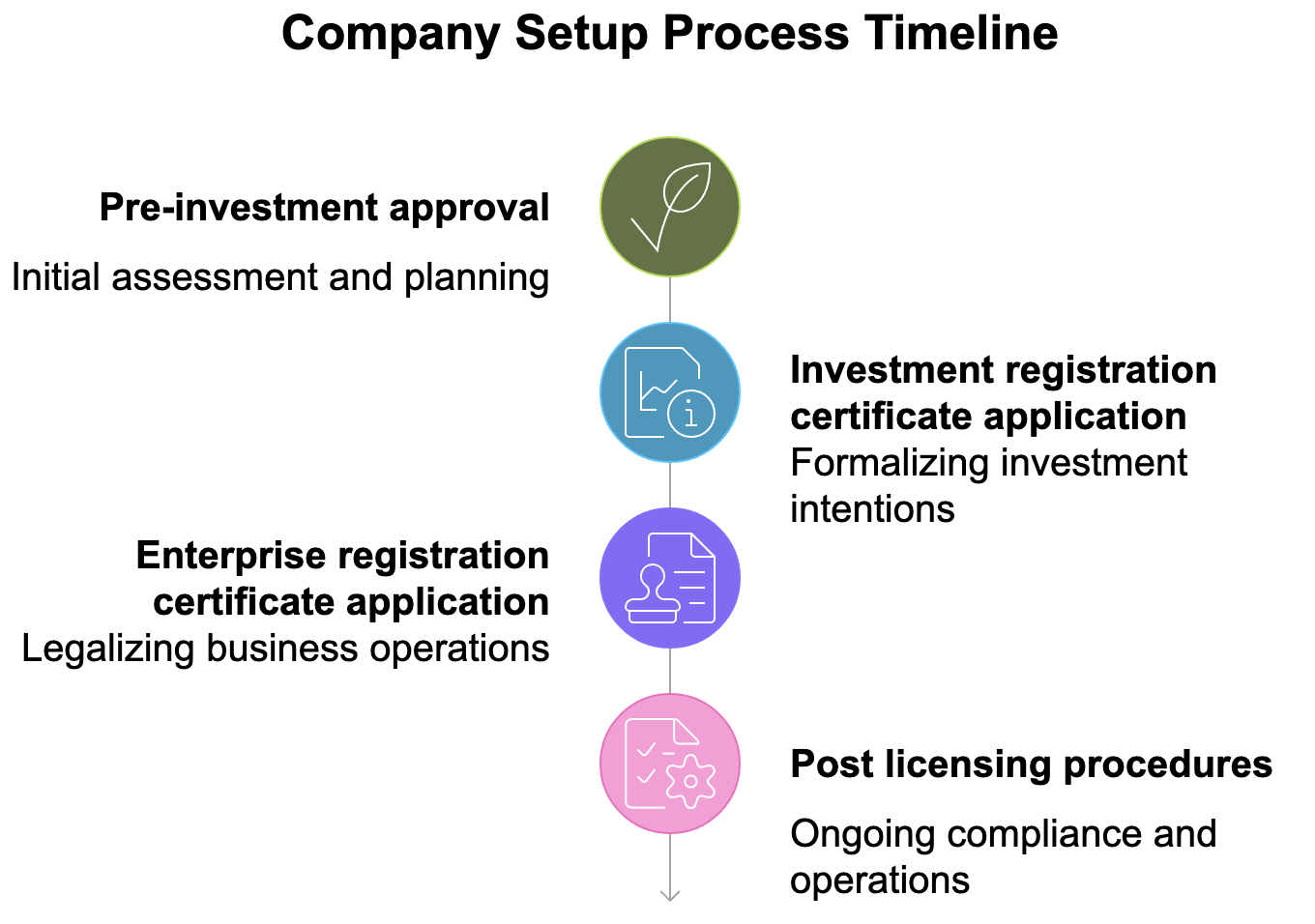
Vietnam is one of the fastest-growing economies in the world. The low cost of living and highly qualified population make it an ideal location for foreign companies who are looking to branch out and invest. However, expanding internationally has its disadvantages as well. Not knowing the local laws and regulations makes it a thousand times harder to open a company overseas.
Decree 94/2025/NĐ-CP (effective 1 July 2025) and explain its key points about the regulatory sandbox
Decree 94/2025/NĐ-CP (effective 1 July 2025) and explain its key points about the regulatory sandbox mechanism for peer-to-peer (P2P) lending.
Table of contentsView more
Table of contents
Decree 94/2025/NĐ-CP (effective 1 July 2025) and explain its key points about the regulatory sandbox mechanism for peer-to-peer (P2P) lending.
✅ Overview of Decree 94/2025/NĐ-CP
The Decree was issued by the Government of Vietnam on 29 April 2025.
It enters into force on 1 July 2025.
Its full title is: Decree on the “controlled testing mechanism” (cơ chế thử nghiệm có kiểm soát) in the banking sector.
It establishes a regulatory sandbox framework (often called sandbox mechanism) for certain Fintech solutions in the banking sector — including credit scoring, open APIs (data sharing) and importantly for P2P lending.
The main purpose is to enable new products, services and business models using financial technology (Fintech) to be piloted in a controlled environment, so regulators can monitor, evaluate risks/benefits, and update regulatory frameworks accordingly.
???? Scope & Application
The Decree defines the scope and the kinds of entities/solutions subject to the mechanic:
Scope of regulated sandbox: It covers fintech solutions applied in the banking sector, specifically:
Credit scoring.
Data sharing via open API.
Peer-to-peer (P2P) lending.
Entities subject to the Decree:
Credit institutions and foreign bank branches, under the Law on Credit Institutions.
Financial technology (Fintech) companies.
State competent authorities.
Customers, other organisations/individuals involved with sandbox-participating solutions.
For P2P lending specifically, what’s important is that the Decree treats it as one of the eligible fintech activities for the sandbox.
???? Key Provisions Relating to P2P Lending in the Sandbox
Here are the major points that apply particularly to P2P lending platforms under the sandbox regime:
Participation is voluntary:
Entities engaging in P2P lending may choose to participate in the regulatory sandbox. Participation in the sandbox is not mandatory for offering P2P lending services.
Fintech enterprises may continue to operate under existing legal frameworks (e.g., investment law, enterprise law, civil code) even if they do not register for the sandbox.
Certificate of participation:
To join the sandbox, an entity must apply and be granted a certificate of participation by the State Bank of Vietnam (SBV).
For P2P lending solutions, the certificate defines the scope of testing: the specific product/service, its testing timeframe and boundaries.
Testing period, space and scope limits:
The maximum testing period is 2 years from the date the certificate is granted.
The testing must take place within Vietnamese territory (no cross-border testing) unless otherwise specified.
The scope of testing for a P2P lending company is specified in its certificate, and the P2P entity may only provide P2P lending solutions within that testing scope. It cannot simply operate as a full-scale P2P lending platform beyond the sandbox scope.
Specifically, for P2P lending: the platform may not itself provide collateral/security for loans of its borrowers, nor act as a borrower itself, nor act in the capacity of a pawn-service company.
Conditions and criteria: Entities applying must satisfy criteria such as:
The fintech solution is something that current law/regulation has not clearly covered (i.e., innovative) and has been assessed for feasibility.
The entity must have proper governance, management and risk-framework, especially for P2P lending: e.g., measures on borrower exposure, risk management etc.
Reporting, oversight, monitoring:
Organisations in the sandbox must report periodically (quarterly etc) on operations, key indicators, risks and results.
If an incident causes significant risk/disruption, they must notify the SBV immediately (within 24 hours) and follow up.
SBV has power to monitor, request information, issue warnings, and revoke certificate if the entity fails to comply with conditions or causes material risk.
Restrictions specific to P2P lending:
The Decree places a requirement on P2P lending platforms under sandbox to manage the maximum debit balance (loan exposure) for a borrower. If this measure is not implemented, the certificate may be revoked.
The P2P lending company must route transactions via bank accounts or licensed e-wallets and use credit information from the central credit information centre.
Termination, completion and extension of testing:
SBV may terminate testing and revoke the certificate in cases of non-compliance, expiry of period without extension, failure to implement, etc.
Extension is possible under certain conditions. Once testing completes successfully, an entity may be issued a certificate of completion.
???? Why This Matters for P2P Lending in Vietnam
The sandbox opens up a regulated pathway for P2P lending platforms to test innovations in a controlled environment, which is helpful given the rapid growth and risks in the P2P lending sector. Lexology+1
While sandbox participation is voluntary, being in the sandbox may provide better clarity and regulatory assurance (from SBV) and may facilitate eventual full licensing or formal regulation.
For regulators, the sandbox gives an opportunity to observe P2P lending models, assess risks (fraud, credit risk, liquidity risk) and then potentially refine the regulatory framework.
For customers and the public, the sandbox framework reinforces consumer protection, risk-monitoring, reporting obligations and sets a standard for responsible P2P lending operations.
???? Key Points to Watch / Implementation Issues
The sandbox certificate does not immediately equal a full license to operate a normal P2P lending business outside the sandbox. Entities must remain within the scope, period and conditions specified.
The two-year maximum testing period means that P2P platforms will need to plan their transition post-sandbox to full regulation or exit.
The requirement to manage maximum borrower debt exposure and route transactions through banks/e-wallets may raise operational and compliance costs.
Entities will need robust risk management, data infrastructure, and reporting systems to meet SBV’s monitoring expectations.
Since the sandbox is new, practical implementation details, guidance and SBV supervisory practices will still evolve — P2P platforms should monitor updates from SBV and related agencies.
???? Summary Table – Key Features for P2P Lending under Decree 94
Feature
Description
Application date
Decree issued 29 April 2025; enters into force 1 July 2025.
Eligible fintech activity
P2P lending is explicitly included alongside credit scoring & open API.
Voluntary participation
Entities may choose sandbox involvement; not compulsory for P2P lending.
Certificate of participation
Issued by SBV; defines scope, period and conditions.
Comment