Vietnamese

Support

📱+842822446739
✉️all@lhdfirm.com

Social

Obtaining a Work Permit In Vietnam

Navigating Vietnam’s Legal Landscape - How to Successfully Obtain a Work Permit In Vietnam for Foreign Professionals
Table of contents View more
Table of contents

Obtaining a work permit in Vietnam is a vital step for foreign professionals who wish to work, stay, and contribute legally within this emerging Southeast Asian market. Whether you're a corporate executive, skilled specialist, or entrepreneur, understanding the intricacies of "Obtaining a Work Permit In Vietnam" can significantly ease your transition and ensure compliance with the country's evolving immigration laws. This comprehensive guide delves into the legal frameworks, benefits, challenges, procedures, and essential tips on securing a work permit, empowering expatriates and companies to navigate Vietnam’s regulatory environment confidently.

Introduction to Vietnam Work Permits

In the vibrant Vietnamese economy, a work permit is not just a formality but a crucial legal document underpinning lawful employment for foreigners. It acts as a bridge connecting foreign talent to Vietnam’s burgeoning opportunities while safeguarding national sovereignty and labor laws. For many expatriates, obtaining this permit is the cornerstone of stability, allowing them to work, access social services, and establish long-term residence.

The importance of adhering to Vietnam’s immigration regulations cannot be overstated. Working without a valid permit exposes individuals and employers to serious legal risks, including hefty fines, deportation, and employment bans. Conversely, obtaining and maintaining proper work authorization ensures compliance, instills confidence from Vietnamese authorities, and offers peace of mind for both parties. As Vietnam continues its rapid economic development, understanding who needs a work permit and who might be exempt is vital for smooth integration into the local labor market.

Definition and Purpose of a Work Permit in Vietnam

A work permit in Vietnam is an official, government-issued document issued by the Ministry of Labour, Invalids, and Social Affairs (MOLISA) or its authorized agencies. It grants foreign nationals legal permission to undertake employment activities within specified roles, durations, and conditions. Legally, it signifies that the individual’s employment conforms to Vietnamese labor and immigration laws, providing a protective legal status.

Beyond mere legal compliance, the work permit serves as a vital operational tool for companies. It guarantees that the foreign employee’s activities are recognized and protected under Vietnamese law, facilitating benefits such as social security contributions, tax compliance, and access to public services. It also acts as proof of lawful employment when dealing with banking institutions, immigration authorities, or during renewal and residency procedures.

Importance of Complying with Vietnamese Immigration Laws

Failing to secure a work permit before employment is a significant risk in Vietnam. Working unlawfully can lead to penalties such as heavy fines for both employees and employers, detention, and deportation which can mar a professional reputation and disrupt business operations. Vietnamese authorities heavily monitor compliance, especially in sectors with high foreign worker presence like manufacturing, technology, and finance.

Compliance not only averts legal complications but also contributes to a more secure work environment. It fosters trust with government agencies, allowing firms to establish long-term operations and expand their workforce seamlessly. Furthermore, it provides foreigners with peace of mind and stability, giving them access to social benefits and a clearer pathway toward permanent residence if desired—an attractive prospect for expatriates planning an extended stay.

Scope of Work Permits: Who Needs One?

Vietnamese law stipulates that most foreign nationals intending to work, whether temporarily or long-term, must secure a work permit unless they fall under specific exemptions. Typically, managers, technical experts, and skilled employees engaged in projects or firm operations are required to obtain one.

However, there are exceptions. Certain categories such as tourists, students, or individuals working under specific bilateral agreements may be exempt from requiring a permit temporarily or under specific conditions. Additionally, senior executives or investors who own substantial shares in a Vietnamese company might qualify for different types of visas or residence permits without a formal work permit, depending on the circumstances.

Benefits of Holding a Work Permit

Carrying a valid work permit significantly enhances a foreigner's experience and opportunities in Vietnam. It provides a foundation for legal stability, access to social benefits, and smoother processes for long-term residence. For companies, this legal credential streamlines operations, reduces risks, and boosts corporate integrity.

Legal and Financial Advantages for Foreigners

One of the foremost benefits of a work permit is its facilitation of financial transactions. Opening a Vietnamese bank account becomes straightforward, enabling legal management of funds, salary payments, and savings. Such banking legitimacy often proves essential for procuring loans or credit facilities, which would otherwise be inaccessible to foreigners without proper residency or employment authorization.

Furthermore, holding a work permit grants access to Vietnam's social security system, healthcare, and pension schemes. This connection ensures that expatriates can receive medical services, contribute to social insurance, and establish a safety net, aligning their current employment with future security. Notably, some financial institutions require proof of legal employment as a prerequisite for granting personal loans or mortgages, making the work permit a key document for financial planning and stability.

Residency and Stability

Linked directly to the work permit is the opportunity for temporary residency in Vietnam. The permit generally corresponds with the duration of employment and, in many cases, serves as a requisite step toward applying for a temporary residence card. This linkage provides expats with legal grounds to reside in Vietnam without fears of illegal stay or detention.

Excelling beyond temporary stays, a work permit can serve as a pathway for long-term residence or permanent settlement. Many foreigners leverage work permits as initial steps toward obtaining a permanent residency status or the Vietnam permanent residence card. This stability not only enhances personal security but also simplifies family reunification, property ownership, and long-term planning.

Benefits for Employers and Companies

From an employer’s perspective, facilitating the process of obtaining a work permit fosters a compliant, efficient hiring environment. It allows companies to recruit skilled expatriates with confidence, knowing that employment arrangements are legally sanctioned. This reduces the hassle of legal disputes, penalties, and possible shutdowns due to non-compliance.

Moreover, employing foreigners with valid work permits enhances a company's reputation, especially if they are part of multinational teams or engaging in export-oriented industries. It strengthens the corporate image as a responsible employer adhering to national laws, which can be crucial in the competitive Vietnamese market. Additionally, compliant companies often find it easier to navigate government inspections, audits, and registration processes, creating a resilient operational framework.

Challenges in Securing a Work Permit

Despite its importance, obtaining a work permit in Vietnam can be an arduous, multi-layered process fraught with bureaucratic complexities. Many applicants find the procedures confusing, time-consuming, and often subject to frequent legal updates that require constant attention.

Complex Application Procedures

The process involves multiple steps: from announcing recruitment, preparing documentation, applying for official approvals, to ultimately submitting applications to relevant authorities. Each phase demands meticulous attention to detail, adherence to timelines, and active follow-up.

Changes in Vietnamese law—such as amendments to visa regulations, work permit quotas, or documentation requirements—add an additional layer of complexity. Applicants must stay informed and adaptable, often relying on legal experts to interpret the latest rules and ensure smooth processing. A misstep at any stage can lead to delays, rejections, or extra costs.

Documentation and Evidence Requirements

One of the most daunting aspects of the application process is compiling the extensive list of documents needed. Applicants must submit personal identification, criminal background checks, medical certificates, proof of qualifications, and company-related papers like the Enterprise Registration Certificate (ERC) and investment licenses. Many foreign documents require legalization and translation into Vietnamese, further complicating preparations.

Demonstrating the demand for a foreign worker can also be a significant hurdle. Applicants must justify the necessity of hiring a foreign national by providing detailed recruitment notices, job descriptions, and justifications linked to business needs. Failing to do so often results in application denial, underlining the importance of thorough preparation.

Common Reasons for Application Denial

The primary reasons for denial include inadequate documentation, inconsistencies in submitted information, or failure to convincingly demonstrate the need for a foreign specialist. Common pitfalls involve missing required approvals, incomplete recruitment evidence, or non-legalized foreign documents.

Applicants and employers must pay close attention to the specificity and accuracy of records, as well as clarity in justification for employment of foreign nationals. Legal missteps—such as submitting outdated forms or neglecting to include a recent health certificate—can result in delays or outright rejection, emphasizing the need for expertise and vigilance in the process.

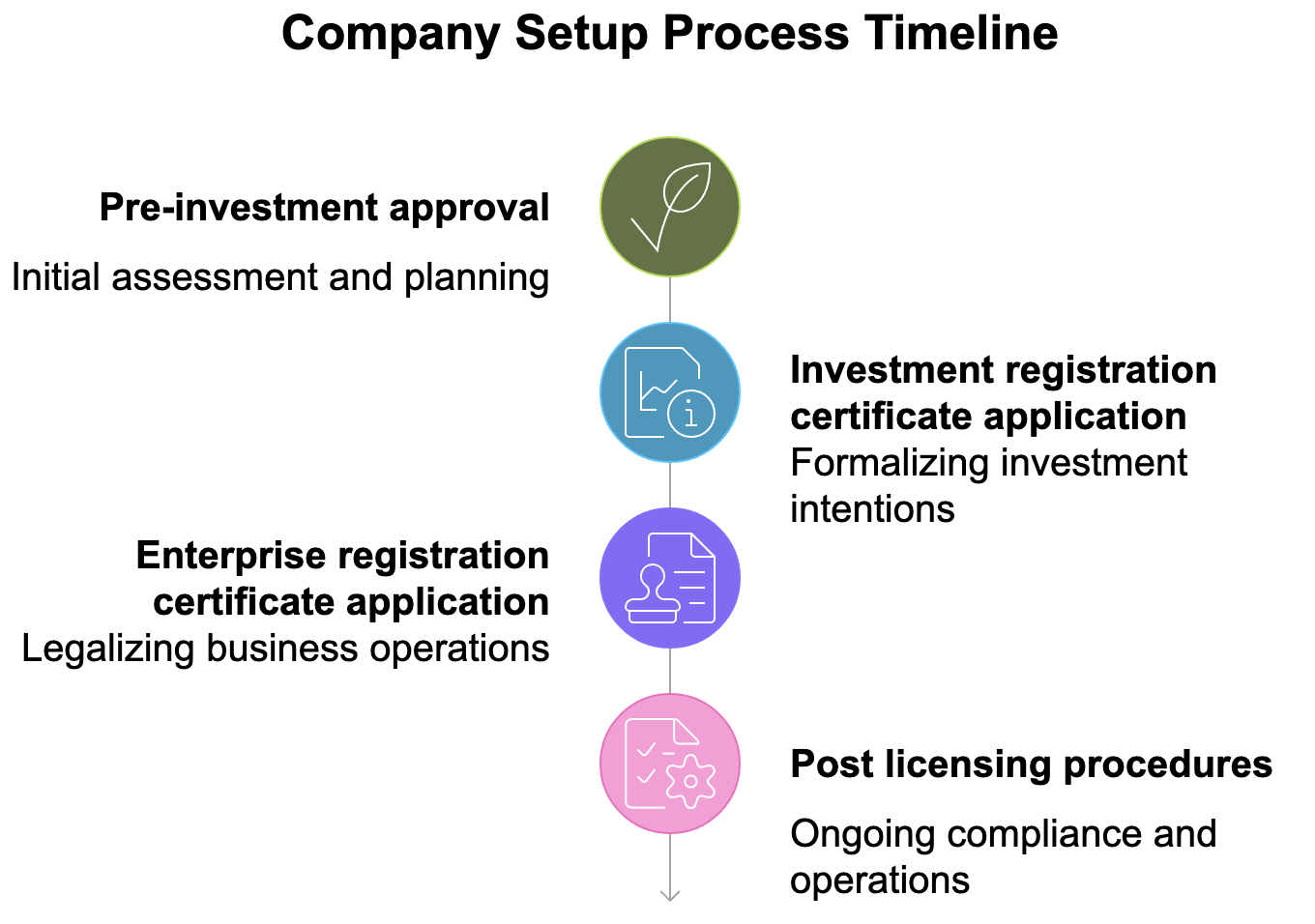
Step-by-Step Process to Obtain a Vietnam Work Permit

Successfully navigating the complex pathway to a Vietnam work permit involves understanding each phase thoroughly. From initial recruitment to receiving the permit, each step must be executed carefully, often with professional guidance for optimal results.

Step 1: Announce Recruitment

The initial step involves publishing a detailed recruitment notice to attract Vietnamese and foreign applicants. The notice should specify job descriptions, qualification requirements, salary ranges, and the recruitment platform used—whether online job portals, government employment centers, or direct outreach.

Proper documentation of recruitment efforts, including copies of job advertisements, is crucial. Authorities require proof that local qualified candidates were considered first, emphasizing transparency and fairness. This notice must be clear, comprehensive, and compliant with Vietnamese labor regulations, setting the stage for demonstrating legitimate business needs.

Step 2: Submit Foreign Expert Demand Report

Once the recruitment process is completed, the employer must document and justify the necessity of hiring a foreign expert by submitting a demand report to the Department of Labour, Invalids, and Social Affairs. This report includes detailed job descriptions, recruitment outcomes, and reasons why Vietnamese staff could not fill the position.

The report must be backed by concrete evidence, such as recruitment notices, interview records, or internal assessments showing skills gaps. This step validates the employment intent and is critical for obtaining official approval to proceed with hiring a foreigner.

Step 3: Apply for Approval of Foreign Workforce Usage

Following the demand report, the employer applies for official approval to employ foreign workers. This involves submitting all supporting documents and possibly responding to queries from authorities. The approval process verifies that the employment aligns with Vietnamese labor needs and regulations.

It is beneficial to ensure completeness and accuracy in submitted materials, as delays or refusals often stem from incomplete or improperly justified applications. An approved demand allows the employer to move forward with the actual application for the work permit.

Step 4: Prepare Required Documentation

This phase involves gathering and legalizing a comprehensive set of documents, including personal identification, criminal backgrounds, health certificates, and educational qualifications. Foreign documents typically require legalization or attestation through Vietnamese authorities or embassies, accompanied by translations.

Attention to detail, proper authentication, and compliance with legal procedures are essential to prevent application rejection. Employers often engage legal or consulting experts to streamline document preparation and legalizations, saving time and avoiding mistakes.

Step 5: Submit Application for Work Permit

The prepared application package is now submitted to the designated Vietnamese authority—usually the local Department of Labour or the Immigration Department. The application should be complete, with all supporting documents, forms, and approvals included.

Processing times can vary, typically ranging from a few weeks to a couple of months. Employers should anticipate potential follow-ups or requests for additional information, maintaining communication with authorities to ensure smooth processing. Timely submission and proactive follow-up significantly enhance the chances of approval.

Step 6: Receive the Work Permit

Upon approval, the foreign employee receives the work permit, which is valid for a specified period—often up to two years. The permit can be renewed or extended, provided compliance is maintained. Post-approval obligations include registering with local authorities, obtaining a residence card, and adhering to Vietnamese labor laws.

Once obtained, the work permit enables legal employment, access to social benefits, and paves the way for eventual permanent residence options. Employers and employees should stay alert to renewal dates, documentation renewal processes, and legal obligations to retain their lawful status.

Essential Documents for Work Permit Application

The documentation phase demands meticulous attention to detail. Ensuring all requirements are met minimizes delays and maximizes the likelihood of approval. Each document serves a vital purpose and must either be authentic, legalized, or translated accurately.

Application Form and Personal Identification

The application form, typically Form No. 11/PLI, must be filled out completely and accurately. It includes personal details, employment specifics, and background information. Alongside, a notarized copy of the passport ensures identity verification.

Notarization involves authenticating copies through recognized authorities, whether in the applicant's home country or Vietnam. This process assures the Vietnamese authorities of the authenticity of the submitted documents, forming a cornerstone for a valid application. It’s imperative to double-check all personal data for consistency across documents.

Criminal Background Check

A clean criminal record from the applicant's home country or Vietnam is essential. This document proves the applicant has no criminal liabilities that could jeopardize public safety or violate hiring policies.

Such background checks must be recent—usually within six months—and translated into Vietnamese if issued in another language. Legalization or attestation by diplomatic authorities enhances credibility. Some cases demand specific certifications from Vietnamese police or foreign embassies, emphasizing due diligence in verifying applicant background.

Photographs

Recent photographs conforming to specified standards—white background, front view, 4cm x 6cm size, and no colored glasses—are required. These photos serve as identification and should accurately reflect the applicant’s current appearance.

Applicants should ensure quality, clarity, and recency, as blurry or outdated pictures can cause processing delays. Proper presentation of photos demonstrates professionalism and compliance with Vietnamese standards.

Medical Examination

A health certificate from recognized medical providers confirms that the applicant is free from contagious or serious illnesses. The examination must be recent, typically within 12 months, and performed at authorized clinics or hospitals.

Vietnamese authorities often require specific tests such as blood work, X-rays, or screenings for infectious diseases. This process safeguards public health and ensures the applicant is fit for employment. It is recommended to undergo the exam early to avoid expired certificates during the application process.

Qualification and Experience Proof

Educational diplomas, degrees, or professional certifications verify the candidate's skills and suitability for the role. Employers must also provide proof of relevant work experience, previous permits, or exemptions.

All foreign certificates need legalization or attestation and proper translation into Vietnamese. This step ensures that the qualifications meet Vietnamese standards and are officially recognized, which is critical in demonstrating the applicant’s competency and fulfilling legal requirements.

Company Registration and Investment Documents

The employer must submit the Enterprise Registration Certificate (ERC) and, if applicable, the Investment Registration Certificate (IRC). Any amendments to these documents, reflecting changes in company structure or investment, should also be included.

Foreign companies or investment projects must have properly legalized and translated documents to validate their legal standing. Such documentation confirms the business’s legitimacy and capacity to employ foreign workers, forming a vital part of the application process.

Legalization of Foreign Documents

Legalization is a crucial step when submitting foreign-issued certificates and documents to Vietnamese authorities. It authenticates the documents, ensuring they are recognized under Vietnamese law, thus preventing delays or rejections.

Overview of the Legalization Process

The process involves multiple stages: initial authentication by the issuing authority, followed by legalization or attestation by the Vietnamese embassy or consulate in the applicant’s home country. The process varies depending on bilateral agreements, the nature of the document, and the country of origin.

Applicants need to plan anticipatively, as legalization can take several weeks. It often includes obtaining apostilles or embassy confirmations, then translating documents into Vietnamese by certified translators before submission.

Importance of Proper Legalization

Proper legalization guarantees that foreign documents will be accepted without dispute during the application process. Invalid or improperly legalized papers can cause delays, additional costs, or outright denials, deterring otherwise straightforward processes.

Ensuring that documents are legally recognized also supports long-term compliance, simplifies renewals, and enhances the applicant’s credibility. For employers and individuals seeking efficiency, engaging experienced legal or translation services is highly advised.

Fees Associated with Work Permits

While Vietnamese government fees are relatively modest, understanding the cost structure helps in budget planning and avoiding unexpected expenses. The fees vary depending on application type, location, and processing speed.

Standard Government Fees

The basic application fee for a new work permit is approximately 400,000 VND. Re-issuance costs around 300,000 VND, with renewals usually requiring about 200,000 VND. These fees are payable at the time of application, often through designated channels such as banks or government portals.

Additional costs may include legal services, document legalization, translations, or expedited processing fees. While government fees are modest, ancillary expenses can add up, underscoring the importance of a well-prepared application to optimize costs.

Factors Influencing Cost

Expenses depend on several factors: the location of employment (urban centers like Hanoi or Ho Chi Minh City may incur higher fees due to administrative charges), the duration of permit validity, and whether expedited services are used. Complex cases involving multiple documents or legal consultations tend to be more costly.

Work permit renewal or re-issuance might also involve additional audits or verifications, influencing overall expenditure. Employers should budget accordingly, securing professional help if necessary to streamline the process.

Cost Management and Advice

In typical scenarios, total costs for obtaining a Vietnam work permit generally do not exceed $800, including legal and administrative fees. Working with trusted legal consultants ensures compliance and prevents costly errors.

Employers and employees are advised to preemptively understand the fee structure, prepare documentation thoroughly, and consider bundled services that include legalization, translation, and legal advice. This strategic approach minimizes delays and unnecessary expenses, ensuring a smooth and cost-effective application process.

Frequently Asked Questions About Work Permits in Vietnam

Understanding the nuances of Vietnam’s work permit regulations helps expatriates prepare better, reduce uncertainties, and avoid pitfalls. Clear guidance also assists employers in managing international human resources efficiently.

Working Without a Permit

Illegal employment is a serious offense in Vietnam, leading to fines, detention, or deportation for the foreign worker, and penalties for the employer. It also jeopardizes future visa and work permit applications and can lead to blacklisting.

To avoid such risks, all employment activities must be backed by valid authorization. Consulting legal experts or immigration consultants can help navigate exemptions, special cases, or temporary permit extensions, thereby reducing the likelihood of unintentional violations.

Application Process: Can I Do It Myself?

While technically possible, applying for a work permit independently requires substantial knowledge of Vietnamese legal procedures, documents, and language. Mistakes or omissions often cause delays or rejection.

Employers strongly recommend engaging qualified legal professionals or specialised agencies familiar with Vietnamese labor law. Their expertise ensures all documentation is compliant, procedures are correctly followed, and outcomes are optimized—saving time, money, and stress.

Validity and Renewal

Work permits are typically valid for up to two years and are renewable, provided the employment continues and regulations do not change. Renewal often demands a similar process as the initial application, including updated documents and approvals.

Employers should monitor permit expiry dates and initiate renewal procedures well in advance—usually three months beforehand—to mitigate risks of lapses in employment legality. Staying compliant enhances future renewal prospects and supports long-term expatriate visas or residence rights.

Family Members and Dependents

Foreign workers with valid work permits generally qualify to sponsor visas for family members such as spouses and children. Dependent visas, however, often do not include employment rights unless specifically arranged.

Dependents typically cannot work unless they obtain separate work permits or visas explicitly allowing employment. It’s vital to plan family immigration or dependent status alongside the primary work permit application, ensuring cohesive legal status for all involved.

Processing Time

The typical processing time for a Vietnam work permit ranges from four to eight weeks, though it can extend due to document issues or legislative changes. Supplementary documents, legalization steps, or authority backlogs can impact timelines.

Proactive preparation, proper documentation, and professional legal assistance can significantly reduce processing duration, enabling foreign professionals to commence work as scheduled. Patience and detailed attention during this phase are crucial.

Exemptions from Work Permits

Certain roles or situations exempt foreigners from requiring a work permit—such as diplomatic personnel, representatives of international organizations, or those engaged in specific bilateral arrangements. Additionally, short-term visas for sightseeing, training, or attending conferences do not necessitate permits.

Specific exemptions depend on current legal provisions, which periodically update. It’s essential to verify eligibility status through official channels to avoid inadvertent violations and ensure smooth visa application procedures.

https://lhdfirm.com/procedure-for-applying-for-a-work-permit-for-foreigners 

Comment

OUR PARTNERS

SP Group logo
Bgrimmpower
Levanta Renewables
Supercorp
TAF Toyota
Maersk
Yamazen
Beiersdorf.vn
Saigon Co.op
Thyssenkrupp
PKDVN
Ricoh
Fivimart
Wacoal Viet Nam
Sumitomodrive