Vietnam is one of the fastest-growing economies in the world. The low cost of living and highly qualified population make it an ideal location for foreign companies who are looking to branch out and invest. However, expanding internationally has its disadvantages as well. Not knowing the local laws and regulations makes it a thousand times harder to open a company overseas.
Vietnam’s escalating economic trajectory over the last two decades has firmly established its status as a rising star within the regional and global markets. Consistent GDP growth, averaging around 6-7% annually pre-pandemic, signals a resilient and expanding economy that offers fertile ground for business ventures. This stability is rooted in pragmatic government policies fostering investment, infrastructure development, and open trade, making Vietnam not just a manufacturing hub but a promising marketplace.
Strategically nestled within Asia, Vietnam serves as a gateway to regional markets such as ASEAN, China, and beyond. The country’s extensive coastline, deepening port infrastructure, and free trade agreements facilitate seamless regional trade expansion. Furthermore, Vietnam’s vibrant digital economy and emphasis on innovation have created a fertile environment for tech startups, e-commerce platforms, and logistics services, positioning it as a comprehensive ecosystem for future growth.
For foreign entrepreneurs contemplating [SET UP COMPANY IN VIETNAM], the benefits extend beyond economic stability. The country offers one of the most competitive costs of operation in Southeast Asia, with affordable labour and low overhead expenses—factors that dramatically enhance profitability and break-even points.
Adding to this allure is Vietnam’s large pool of young, digitally literate, and highly adaptable professionals. This demographic provides a significant advantage for businesses aiming for rapid digital transformation and innovative solutions. Importantly, Vietnam’s integration into regional and global trade networks through numerous free trade agreements enables foreign investors to access markets efficiently while enjoying preferential tariffs and reduced barriers, catalysing corporate growth opportunities.
Before initiating the registration process, thorough market research is essential. This phase involves analyzing industry-specific dynamics, consumer behaviors, and local market needs. For instance, certain sectors such as manufacturing, finance, or healthcare may face unique regulatory environments, requiring tailored planning.
During this period, choosing an appropriate business structure—such as LLC, joint-stock company, or partnership—is crucial. Each structure has distinct advantages regarding ownership, taxation, and liability. Additionally, understanding sector-specific investment conditions, including minimum investment amounts, foreign ownership ratios, and licensing restrictions, can significantly influence your market entry strategy.
Vietnam’s regulations vary across industry sectors, meaning some industries might require special permits or have restrictions on foreign participation. Recognizing these nuances early saves time and helps avoid costly legal setbacks later in the process.
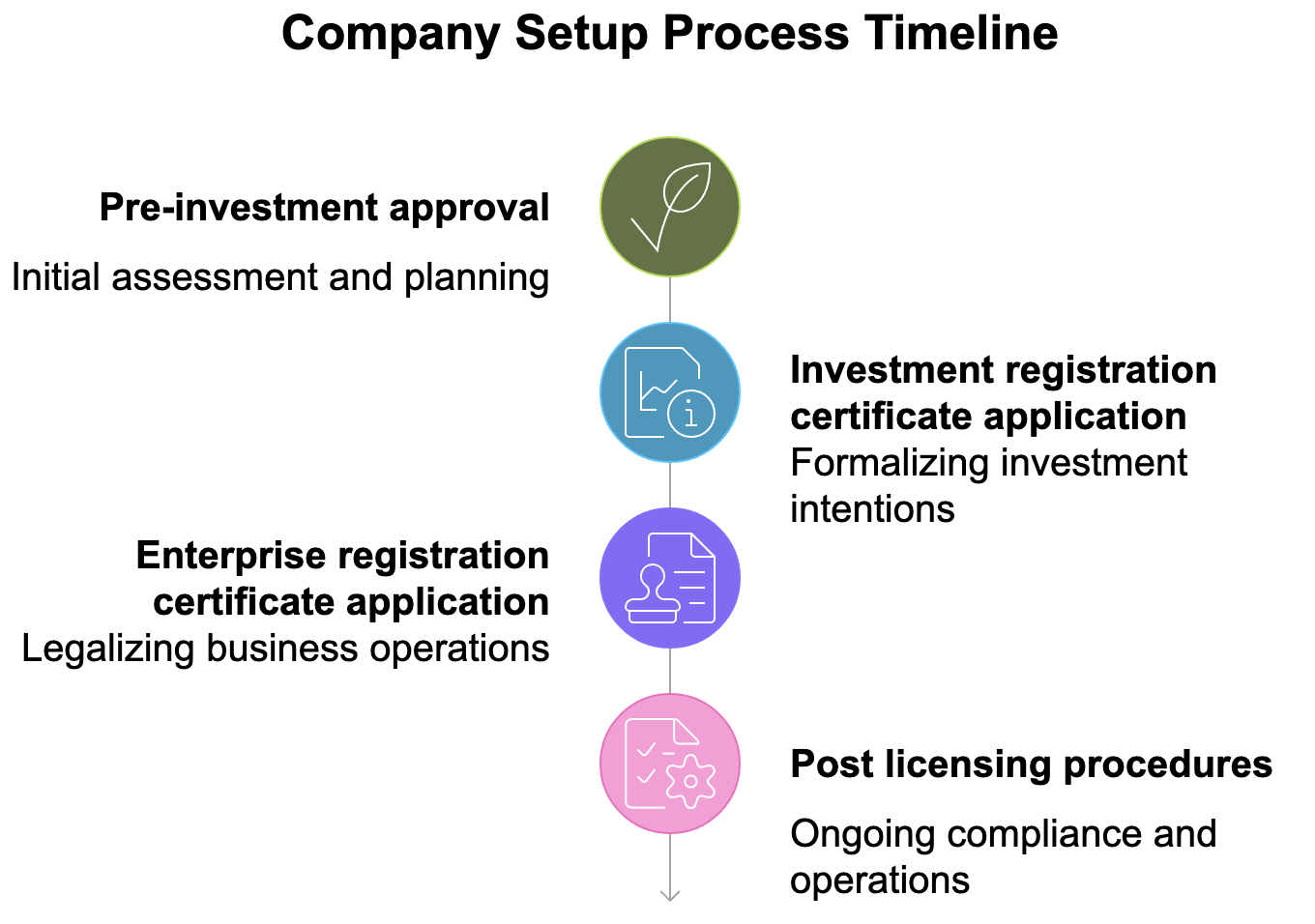
The Investment Registration Certificate (IRC) serves as a cornerstone in Vietnam’s investment landscape, especially for businesses involving foreign capital. The IRC confirms that your investment project adheres to local regulations and qualifies for investment incentives while outlining its scope, scale, and potential impacts.
Not all industries require an IRC, but sectors such as manufacturing, real estate, or services with foreign ownership caps often do. Processing times can vary depending on the project's complexity, industry sector, and the thoroughness of submitted documents.
The process involves submitting detailed documentation that demonstrates compliance with local regulations, demonstrate economic viability, and illustrate the project’s contribution to the local economy. Securing this certificate is critical to proceed with business registration and capital deployment, and engaging experienced legal consultants can facilitate smoother and faster approval.
With an IRC in hand—or if your project falls outside sectors requiring one—the next step is registering your business officially in Vietnam. This involves preparing and submitting a dossier to the Department of Planning and Investment (DPI). The dossier typically includes notarised copies of passports, a comprehensive investment plan, and the company’s charter.
Once the DPI reviews the application, a decision is usually made within a few weeks. If all documents are correctly prepared and align with legal requirements, the process can be swift. Upon approval, a Business Registration Certificate is issued, formally granting your entity legal status to operate locally.
Timing can be influenced by factors like regional bureaucratic efficiency, the complexity of your business project, and accuracy of submitted documents. So, preemptively coordinating with local legal advisors can minimise delays.
Establishing a corporate bank account is a fundamental step in operationalising your new company in Vietnam. Requirements vary across banks but generally include notarized company documents, a certificate of business registration, and proof of capital deposit.
Capital contribution deadlines and minimum deposit amounts differ based on the business type and industry. Some banks have specific onboarding processes, including due diligence and verification, which can affect the timeline. Choosing banks with experience working with foreign investors can ease administrative burdens.
Once the account is activated, funds can be transferred, and the registered capital can be deposited. This step not only confirms financial readiness but also establishes credibility with suppliers and third parties.
To operate legally within Vietnam, companies must register with the tax authorities. This involves obtaining a tax code, registering for VAT, and paying applicable taxes. Meanwhile, registering employees’ insurance, social security, and labour contracts ensures compliance with local employment laws.
The registration process is meticulous, with authorities demanding accurate documentation. Efficient coordination and prompt submissions are vital to avoid penalties and ensure smooth operational start-ups. Proper tax planning and understanding local labour regulations also help optimise costs and mitigate compliance risks.
Depending on your business’s sector—particularly manufacturing, environmental management, or health and safety—you may need to acquire additional licenses or permits. The timeframe varies widely based on the type of licenses, regulatory body review durations, and completeness of application documents.
For manufacturing firms, environmental impact assessments and safety inspection approvals can be lengthy but integral to sustainable operations. Allowing sufficient lead time for licensing processes keeps your project on schedule and prevents unforeseen operational delays.
Different industries within Vietnam have unique regulatory complexities. Manufacturing companies, for example, often require environmental and safety inspections before approval. Finance and healthcare sectors may involve stringent licensing procedures. The nature of your industry directly influences the overall duration from set up to operation.
In sectors with high regulation, delays occur if authorities seek additional clarifications or conduct inspections. Conversely, sectors with straightforward licensing procedures, such as retail or IT services, tend to process faster.
The accuracy and completeness of submitted documents play a defining role in the speed of registration. Incomplete or incorrect filings trigger delays, increased scrutiny, or rejection, extending the timeline substantially.
Investors are advised to work with local legal experts or consultants experienced in Vietnam’s regulatory landscape. This proactive approach ensures all paperwork is correctly prepared, reducing the likelihood of administrative hurdles and enabling a smoother, quicker company setup.
While Vietnam has made strides to streamline business registration, some regional offices and local authorities may have varying levels of efficiency. Urban centers like Ho Chi Minh City and Hanoi often process applications faster than more remote regions.
Government initiatives continuously aim to simplify procedures; however, regional differences mean investors should factor in potential logistical delays. Engaging local partners can help navigate regional bureaucracies effectively and expedite approval processes.
Vietnam’s geographical location offers a clear strategic advantage—providing access to ASEAN economic communities, regional trade agreements, and major shipping routes. This positioning allows companies, once established, to leverage numerous trade benefits, expanding scope and revenue streams.
Furthermore, Vietnam's expanding middle class offers a growing consumer base. The country's economic openness and integration into international markets serve as catalysts for sustained long-term growth, making the relatively initial setup period a worthwhile investment.
Vietnam’s government continues to demonstrate support for foreign investors through policy reforms, incentive schemes, and infrastructure investments. The country’s push for digital transformation fosters innovation hubs, technology parks, and startup ecosystems that support new ventures.
With technological infrastructure improving rapidly, entrepreneurs are better equipped to launch scalable, tech-driven businesses. This dynamic environment encourages innovation and offers plentiful opportunities for entrepreneurs ready to capitalise on Vietnam’s evolving economy.
Although the registration and licensing process can seem demanding, the long-term benefits outweigh the initial procedural timelines. Vietnam’s rapid economic development, youthful demographic, and integration into global trade promise high returns and scalable opportunities for sustainable growth.
Investors who patiently navigate the process can position themselves advantageously within an emerging market with immense growth potential, creating substantial value over time.
In summary, setting up a company in Vietnam involves a structured process that begins with thorough market research and spans registration, licensing, and legal compliance stages. The entire process typically takes about two to three months, influenced by industry-specific requirements and proper documentation preparation. Despite potential delays, Vietnam’s resilient economy, strategic geographical positioning, and expanding consumer base make it an ideal destination for foreign investors seeking long-term growth. With careful planning, expert guidance, and patience, entrepreneurs can successfully navigate Vietnam’s regulatory landscape and unlock the vast opportunities this vibrant market offers.
LHD Law Firm is a reputable law firm based in Vietnam, with offices strategically located in Ho Chi Minh City, Hanoi, and Danang. Specialising in guiding foreign clients through legal, regulatory, and cultural challenges, LHD Law Firm ensures smooth business operations, compliance, and risk mitigation. Their team offers expert legal advice to facilitate a seamless setup of up company in Vietnam, helping clients turn their investment ambitions into thriving Vietnamese businesses.
© 2025 LHD Law Firm

Comment